


IPS Plant Manager: linked and searchable plant technical information
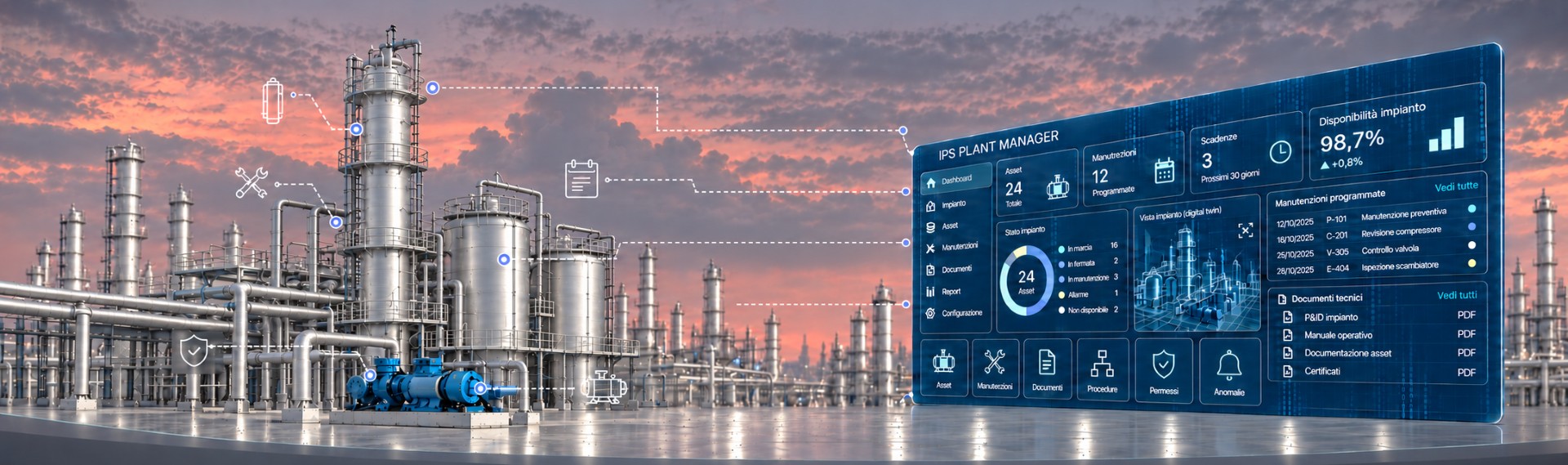
IPS Plant Manager is a modular industrial platform for organizing and linking assets, documents, maintenance activities, deadlines, permits, and events within a shared operational context. The configuration is defined around the processes, assets, and information base of each plant, and can be gradually integrated with existing tools.
- Asset management
- Assets, documents, and deadlines
- Maintenance and documentation
- Plant digitalization
- Seveso sites
- Dashboard
Industrial asset management
A technical document has operational value when it can be found where it is needed and when it is clear which asset, activity, or obligation it refers to. Shared folders and separate archives can store files, but they do not always make relationships, versions, and dates to be monitored clearly visible.
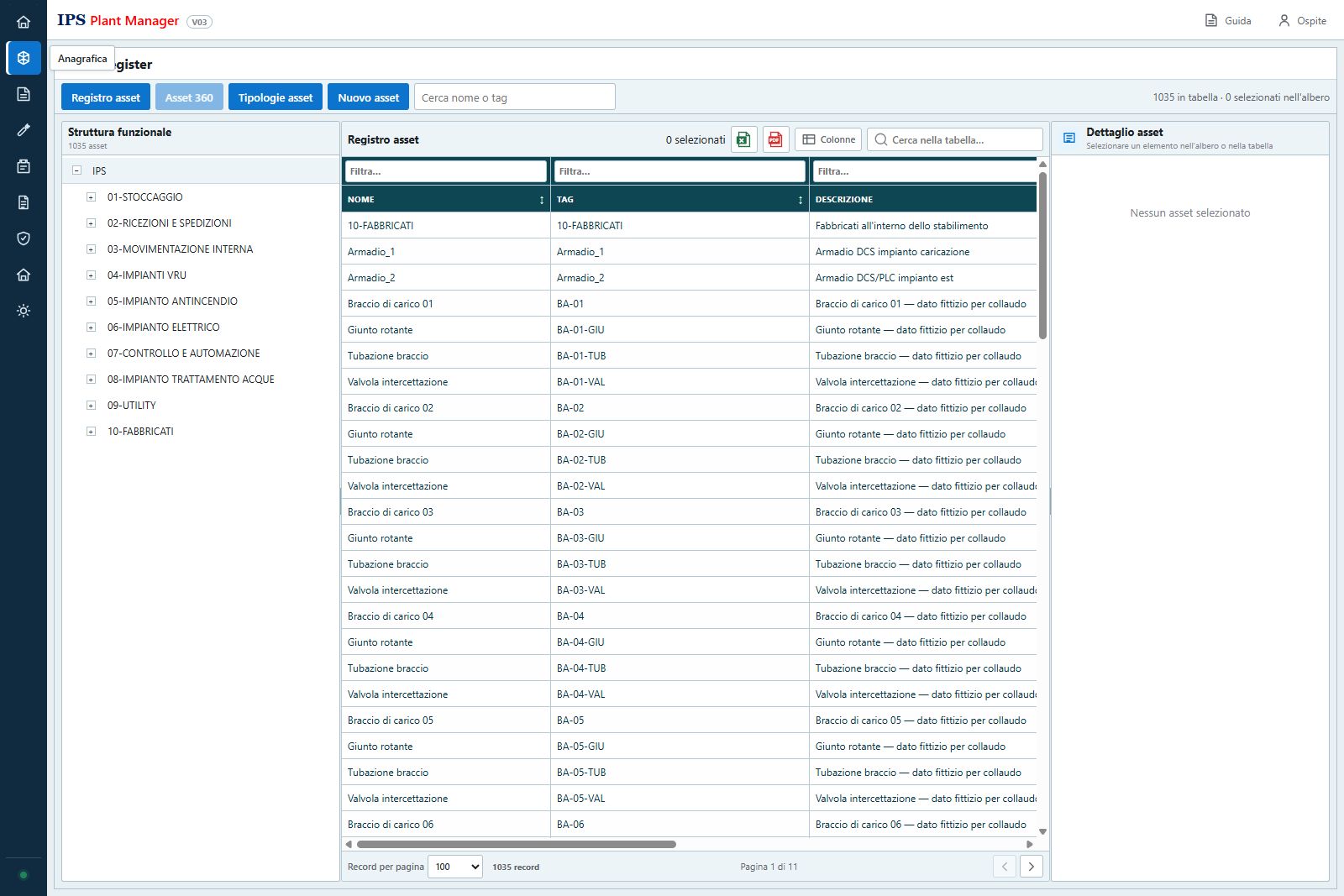
IPS Plant Manager makes it possible to classify documentation and link it to the plant’s operational elements. Manuals, drawings, certificates, reports, and procedures can be organized by type and associated with the relevant assets or processes.
- classification consistent with the site’s documentation base;
- links between documents, assets, and operational records;
- management of version, validity, and expiry information.
The configuration is defined around the available sources and actual responsibilities, with the aim of supporting the retrievability and updating of technical records.
Assets, documents, and deadlines
Technical knowledge of a plant starts with a consistent asset register. When equipment, lines, systems, and areas are described in separate archives, it becomes difficult to reconstruct relationships, responsibilities, and available information.
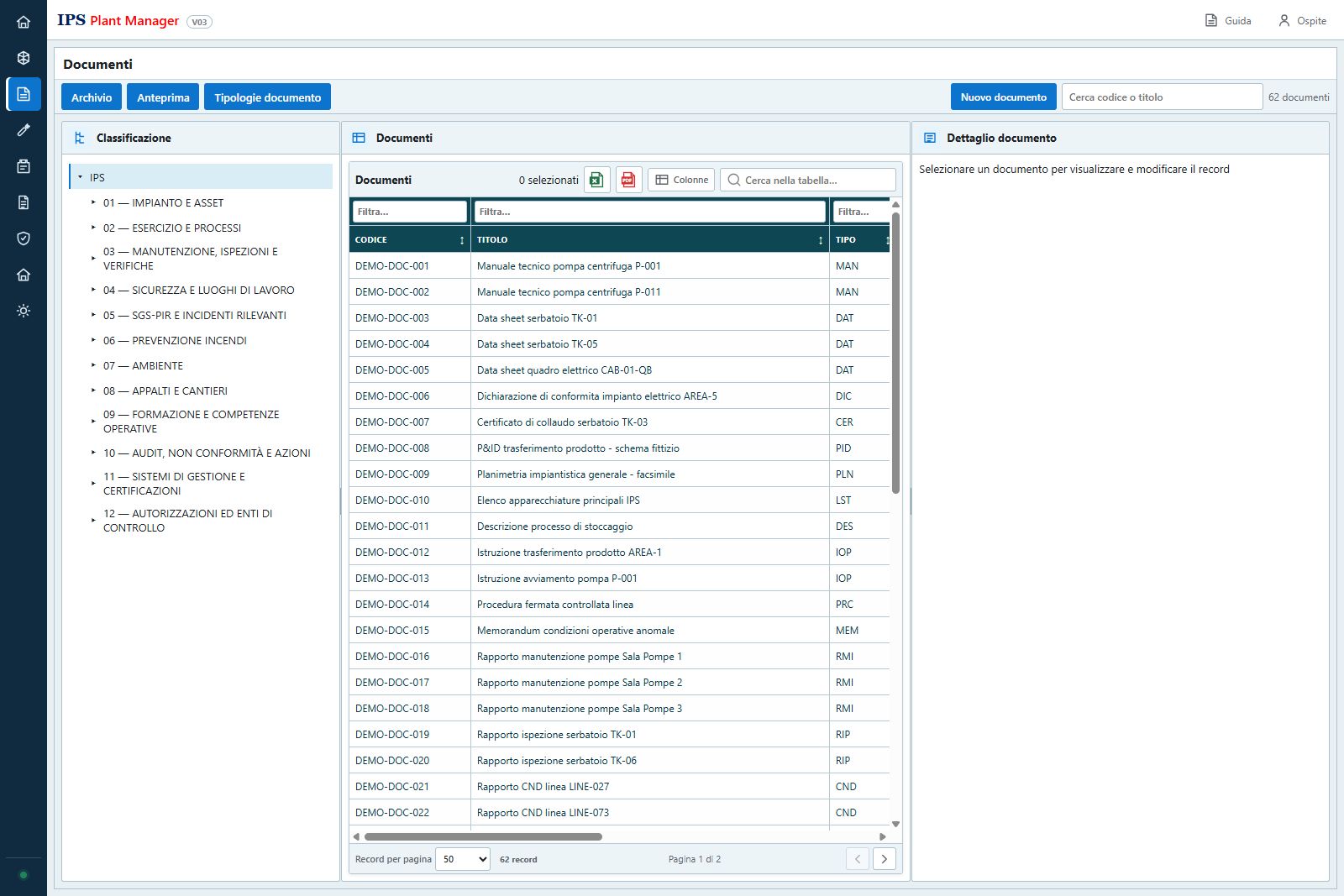
IPS Plant Manager organizes assets in a functional structure configured around the plant. Each item can be identified by tag, type, area, status, and criticality, while maintaining the link to the plant context it belongs to.
- hierarchical structure by site, area, system, and equipment;
- search and filters on the main technical attributes;
- asset datasheet as the access point to linked information.
The Asset Register does not necessarily replace existing sources: it can serve as a common baseline, introduced by priority and progressively linked to the data already available.
Maintenance and documentation
Maintenance planning requires a unified view of assets, frequencies, responsibilities, completed activities, and supporting documents. When this information is spread across spreadsheets, different systems, and local archives, reconstructing the actual status can require manual checks.
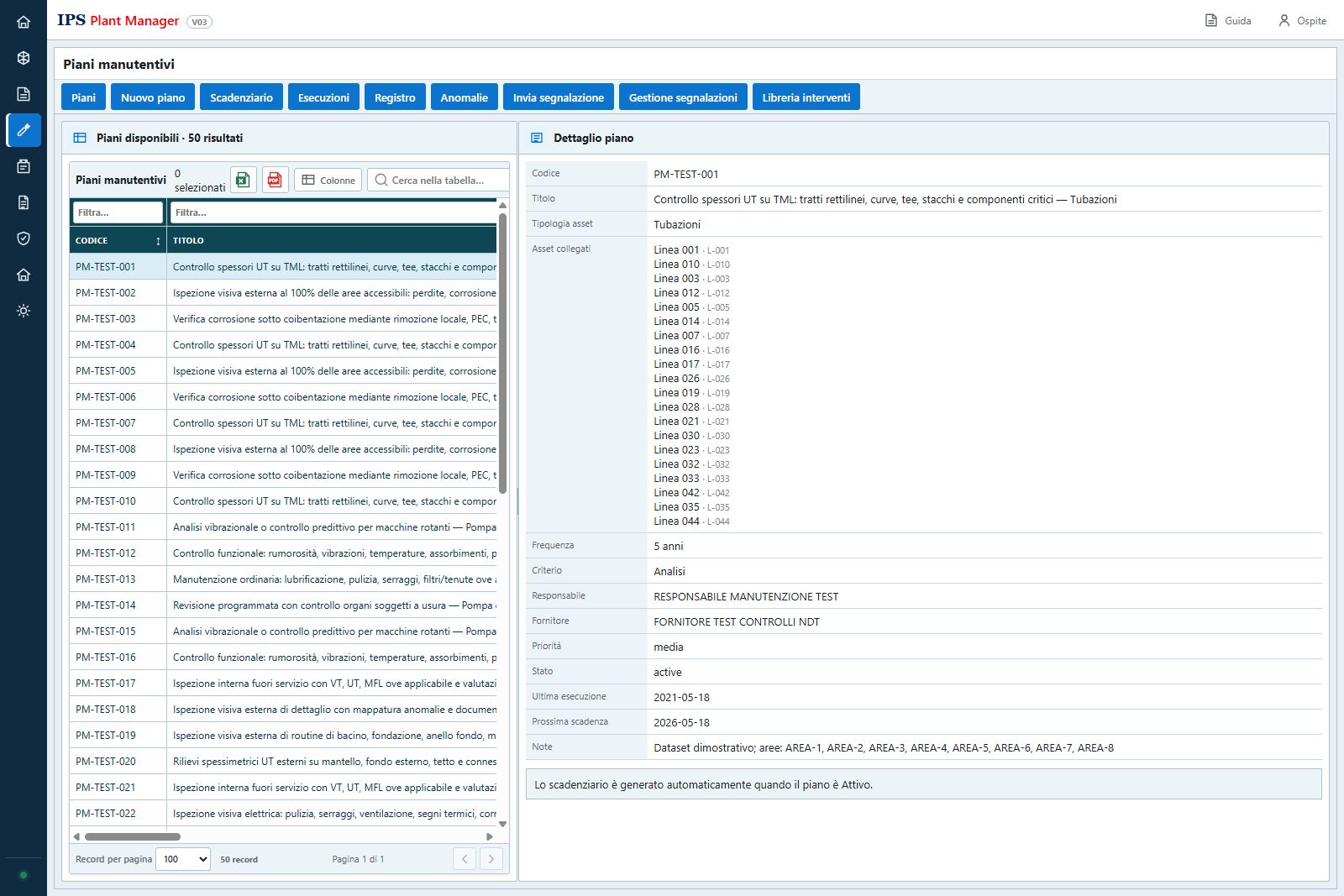
IPS Plant Manager links the maintenance plan to the asset and makes deadlines, executions, history, anomalies, and document references available within the same operational context.
- plans defined by asset type and frequency criterion;
- maintenance schedule and recording of executions;
- history of interventions, anomalies, and associated documentation.
The workflow is configured around the plant’s organizational practices. The aim is not to add bureaucracy, but to support clearer updating and a more reliable reconstruction of the activities carried out.
Plant digitalization
Digitalizing a plant does not necessarily mean replacing established applications, archives, and operating practices all at once. A sustainable introduction starts with an inventory of the available sources and a limited scope that users can verify.
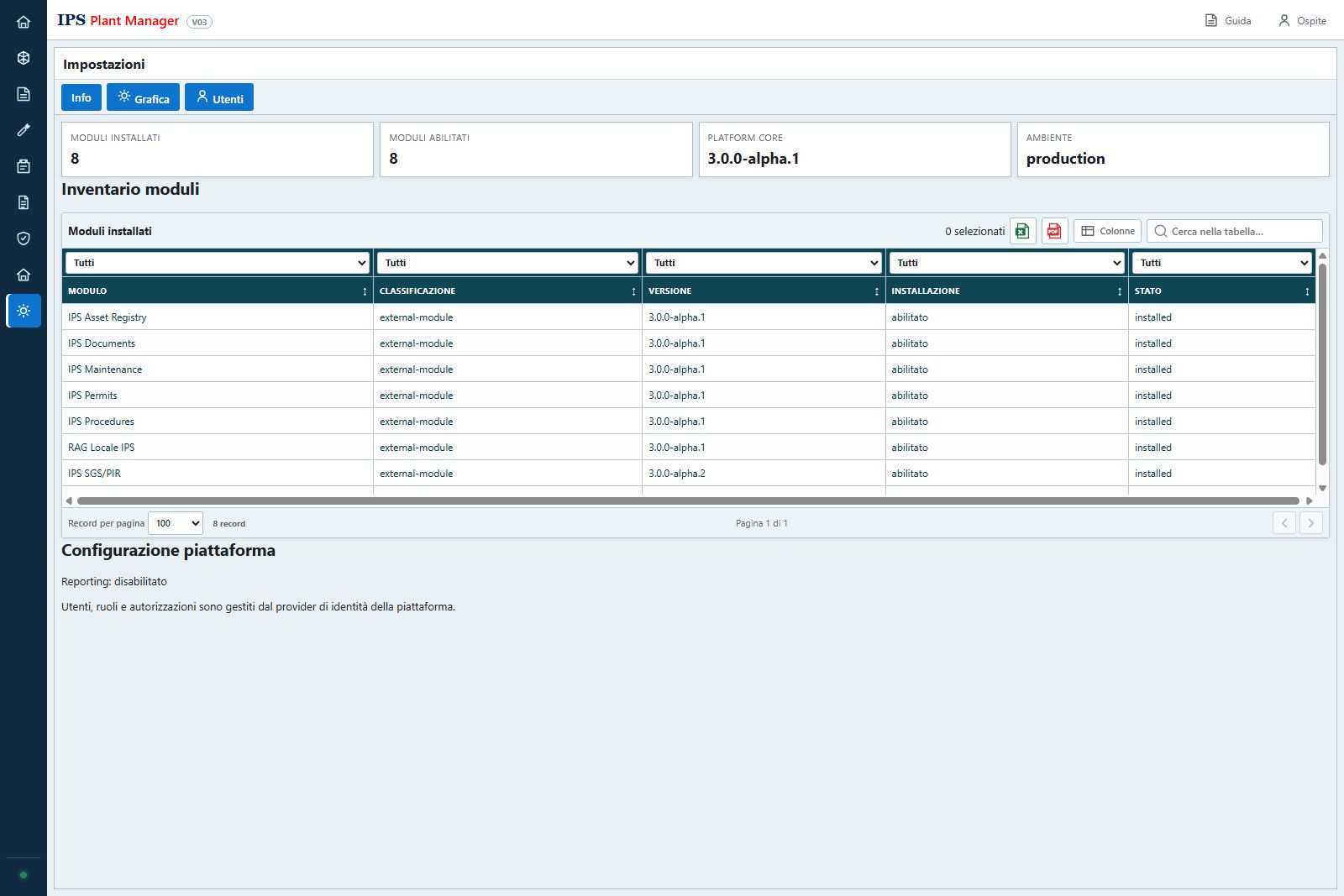
IPS Plant Manager is built as a modular platform. Assets, documents, maintenance, permits, procedures, integrity, and other areas can be activated and configured according to the site’s priorities and progressively linked to existing systems.
- initial mapping of data, processes, and responsibilities;
- selection of the modules actually needed for the first scope;
- controlled pilot before extension to other areas.
Architecture, access, installation, and integrations are assessed together with the client. The platform is therefore a configurable foundation built on the plant’s information base, not a standard model imposed from outside.
Seveso sites
In plants subject to the Seveso regulations, requirements, responsibilities, evidence, assessments, and actions can involve different functions and archives. The operational difficulty often lies in making information retrievable and reconstructing the status of activities without duplicating documents or interpretations.
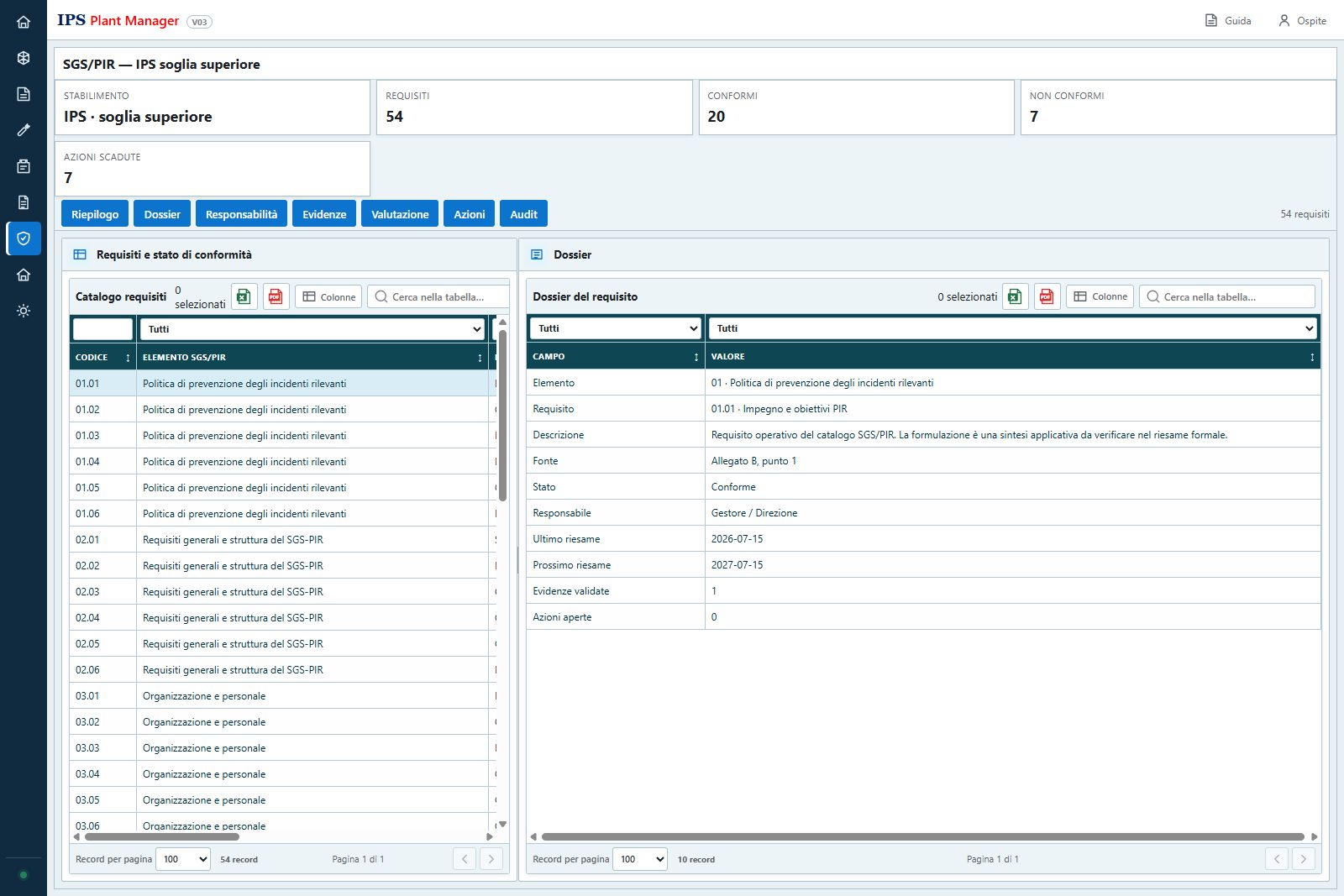
IPS Plant Manager can support the organization of the SMS (Safety Management System) and MAPP (Major Accident Prevention Policy) information base through a structured dossier, linking requirements, responsible persons, available evidence, assessments, and actions to be monitored.
- catalog of requirements applicable to the configured scope;
- links between responsibilities, evidence, and assessments;
- visibility of open actions, priorities, and deadlines.
The platform does not automatically determine the plant’s compliance and does not replace the assessments of the competent officers. Instead, it supports the organization, retrievability, and traceability of the information and evidence used in the management system.
Dashboard
Operations management needs a concise view that makes it possible to recognize priorities and quickly drill down to the origin of a critical issue. A simple set of indicators is not enough if the values are not linked to the records and responsibilities they come from.
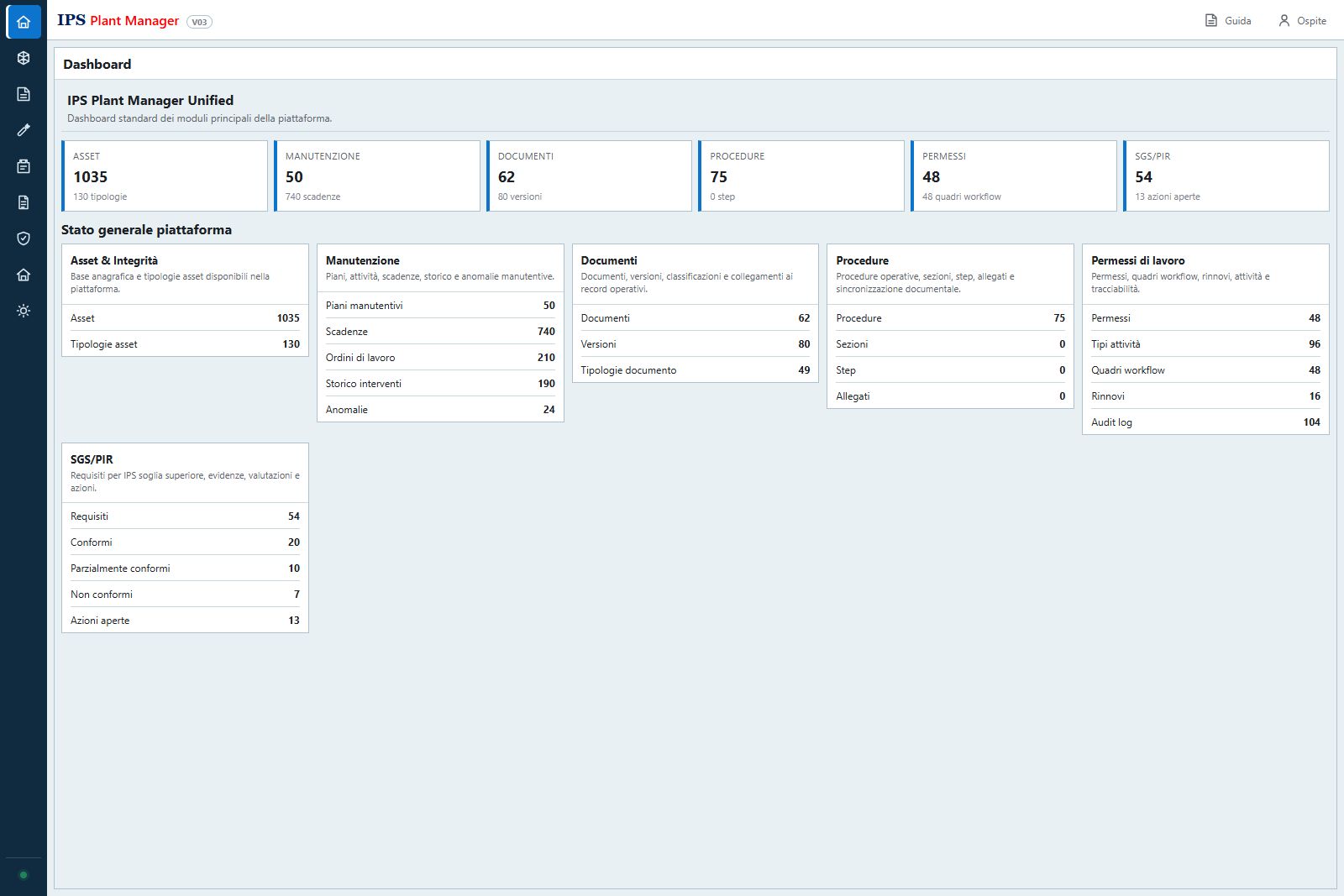
The IPS Plant Manager dashboard brings together the main information from the activated modules and allows users to move from the overall picture to the operational detail of assets, maintenance, documents, procedures, permits, and actions.
- indicators consistent with the configured scope;
- visibility of deadlines, anomalies, and open actions;
- link between management overview and detailed information.
The dashboard is built around the plant’s priorities and the data actually available. It supports operational control and cross-functional discussion, without replacing responsibilities, verifications, or technical decisions.
FREQUENTLY ASKED QUESTIONS
No. IPS Plant Manager is a modular platform that is configured around the client’s processes, assets, roles, and information base.
Not necessarily. The first step is to assess the sources, data quality, access, and the possibility of integration with the tools already in use.